

Equestrian Education Made Easy
Explore visual PDF guides that make equine anatomy, behavior, movement, and nervous system education easier to understand and more fun to learn!
Explore visual PDF guides that make equine anatomy, behavior, movement, and nervous system education easier to understand and more fun to learn!
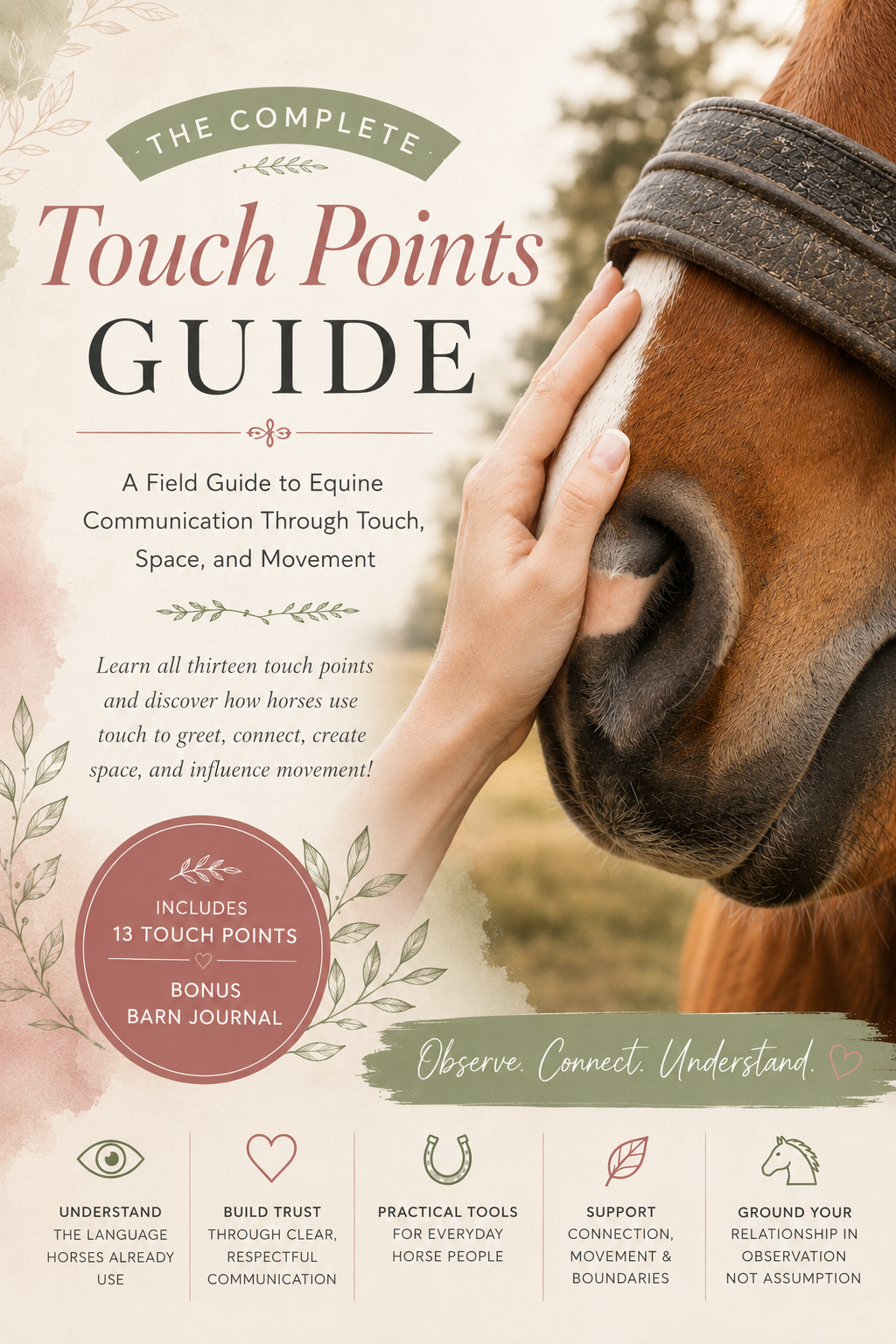
This complete guide expands the conversation with all 13 Touch Points horses use to “talk” to each other, helping you understand how horses naturally communicate through touch, space, and movement.
You'll learn to observe the subtle interactions horses use every day and begin incorporating them into your own relationship with your horse.
All 13 Touch Points, fully explained
What each touch point communicates
How horses naturally use each one
When and how to use them with your own horse
When not to use each touch point
Common responses and what they may be telling you
Field Notes to help you recognize subtle communication
Simple ways to incorporate the touch points into everyday life with your horse
Touch Points Journal
This printable companion journal includes reusable pages you can print as often as you'd like, making it easy to build your observation skills with every horse you meet.
Inside you'll find:
My Horse's Touch Point Profile
Touch Point Observation Pages
Seven-Day Touch Point Exploration
Herd Observation Journal
Connection Reflection Pages
Touch Points in Everyday Life Quick Reference Chart
This guide is for horse owners, riders, trainers, bodyworkers, and anyone who wants to better understand the horse standing in front of them. No prior experience with bodywork or behavior science is required.
Your purchase includes immediate access to The Complete Touch Points Guide and the Touch Points Barn Journal, so you can begin exploring this unique approach to equine communication today.
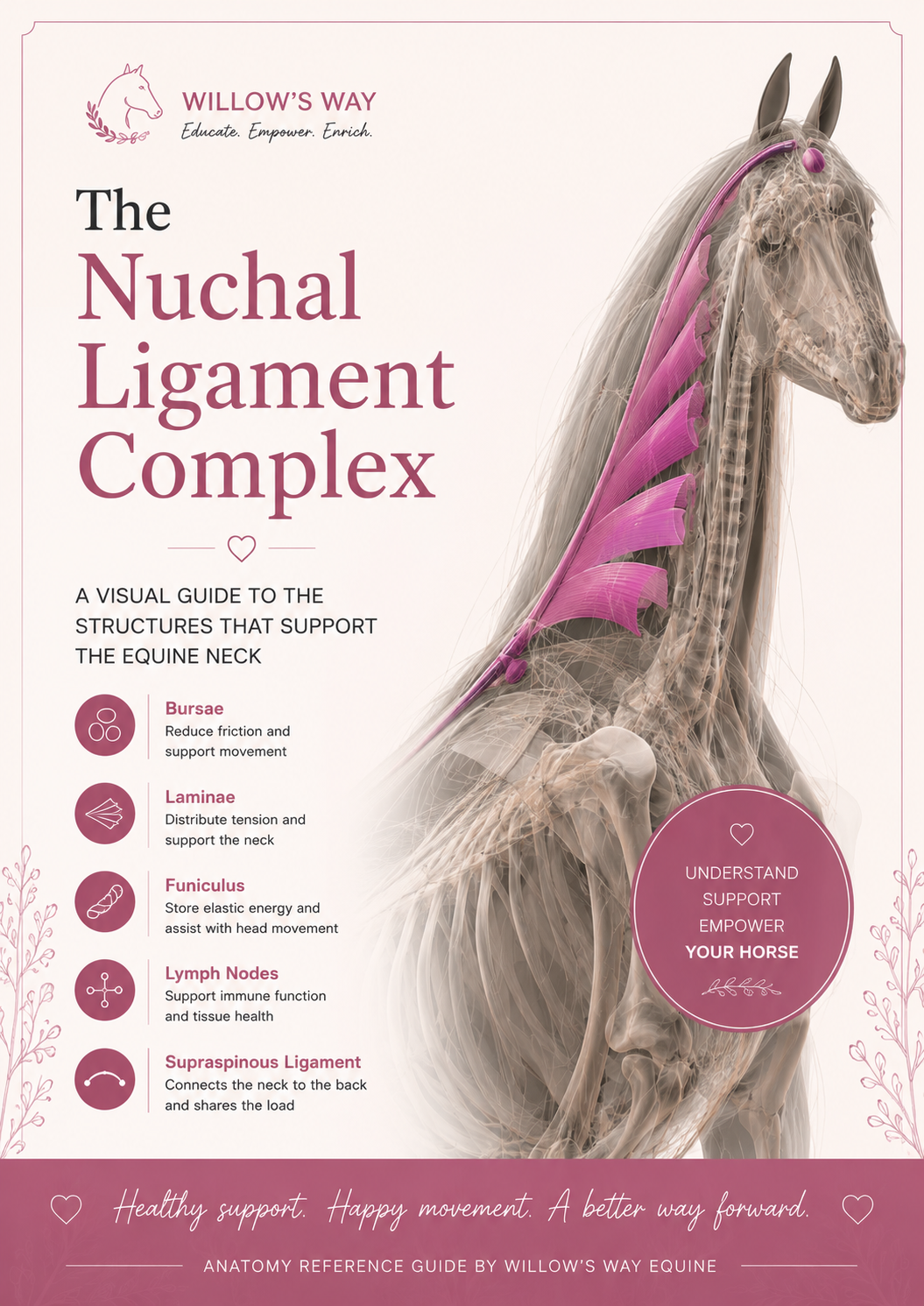
Take a deeper look inside one of the most important support systems in the equine body.
Created to accompany All About the Nuchal Ligament, this beautifully illustrated anatomy guide walks you through the structures that make up the nuchal ligament complex and explains what each one does, why it matters, and how it supports your horse's movement, comfort, and posture.
Using original 3D anatomical images paired with easy-to-understand explanations, you'll gain a clearer understanding of the tissues that help support the head, stabilize the neck, reduce friction, distribute force, and connect the neck to the topline.
Whether you're learning anatomy for the first time or looking to deepen your knowledge, this guide makes complex structures approachable, practical, and relevant to everyday horse ownership.
The cranial and caudal nuchal bursae
The nuchal funiculus
The nuchal laminae
The supraspinous ligament
Nuchal lymph nodes
The role each structure plays in movement and posture
Common signs of irritation or dysfunction
Practical takeaways for supporting your horse's neck and topline
This isn't a veterinary textbook. It's anatomy explained for horse owners—so you can better understand the horse in front of you and make more informed decisions about movement, training, posture, and overall well-being.
✔ Gain a visual understanding of the nuchal ligament complex using original 3D anatomical images.
✔ Learn what each structure does and why it matters in everyday movement.
✔ Recognize common signs that may suggest discomfort within the neck and topline.
✔ Build confidence understanding anatomy without overwhelming medical terminology.
✔ Keep a beautifully designed reference guide you'll return to long after the class is over.
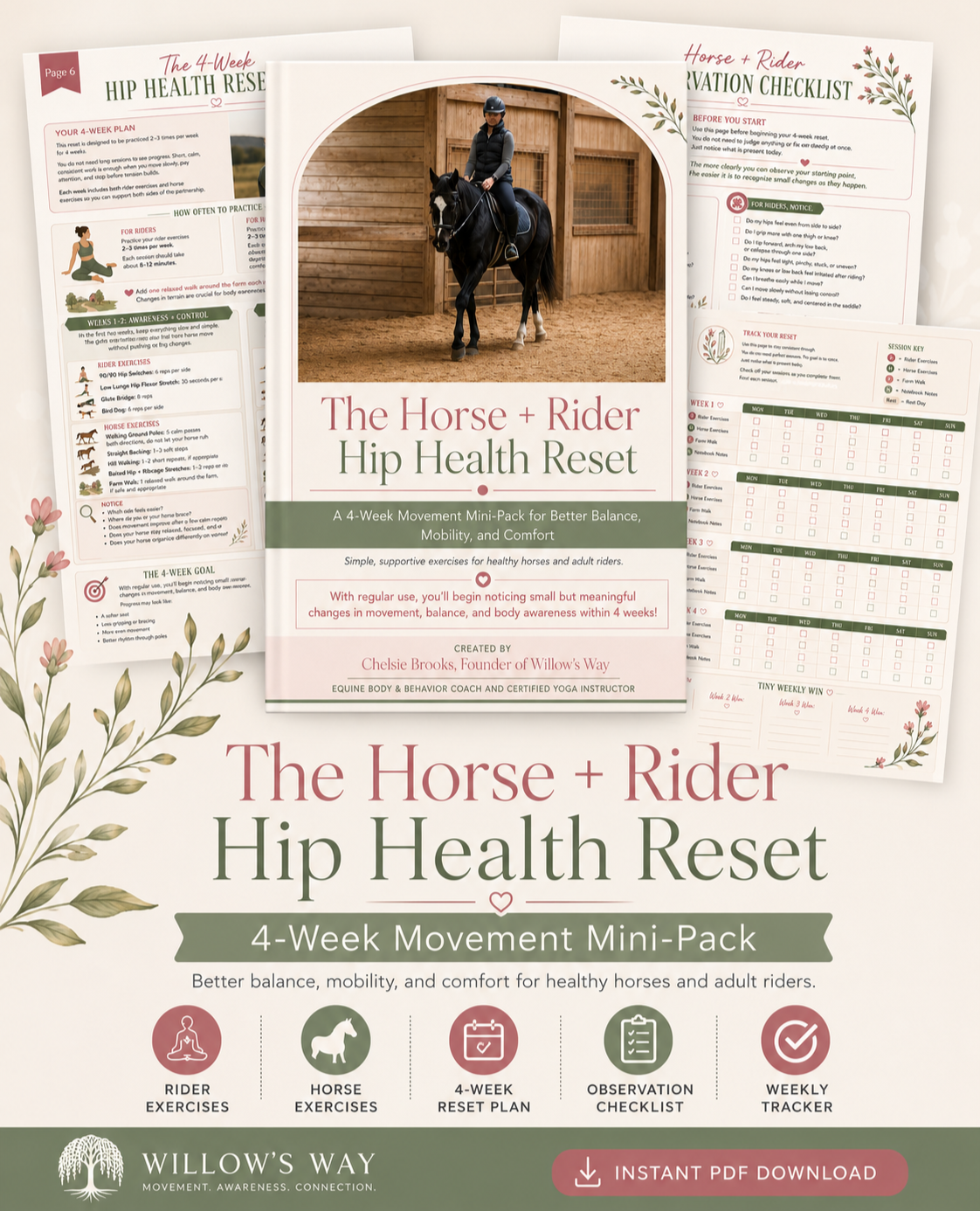
A 4-week movement mini-pack designed to help you and your horse move with more balance, mobility, body awareness, and comfort — without overcomplicating the process.
The hips are a big part of the conversation for both horse and rider. For riders, hip mobility and pelvic stability can influence your seat, balance, shock absorption, and how easily you follow your horse’s movement. For horses, healthy hip and hind-end function can support coordination, smoother transitions, better stepping under the body, and more comfortable pushing power from behind. This reset brings both sides of the partnership into the work, so you are not only asking your horse to move better — you are supporting your own body, too.
Inside this simple, supportive PDF pack, you’ll find rider exercises, horse exercises, a 4-week reset plan, an observation checklist, and a weekly tracker to help you stay consistent without feeling overwhelmed.
This is not about forcing flexibility, drilling movements, or doing more just to do more.
It’s about slowing down, noticing what changes, and using small, thoughtful exercises to help both you and your horse feel more organized, steady, and connected over time.
No results match your search. Try removing a few filters.