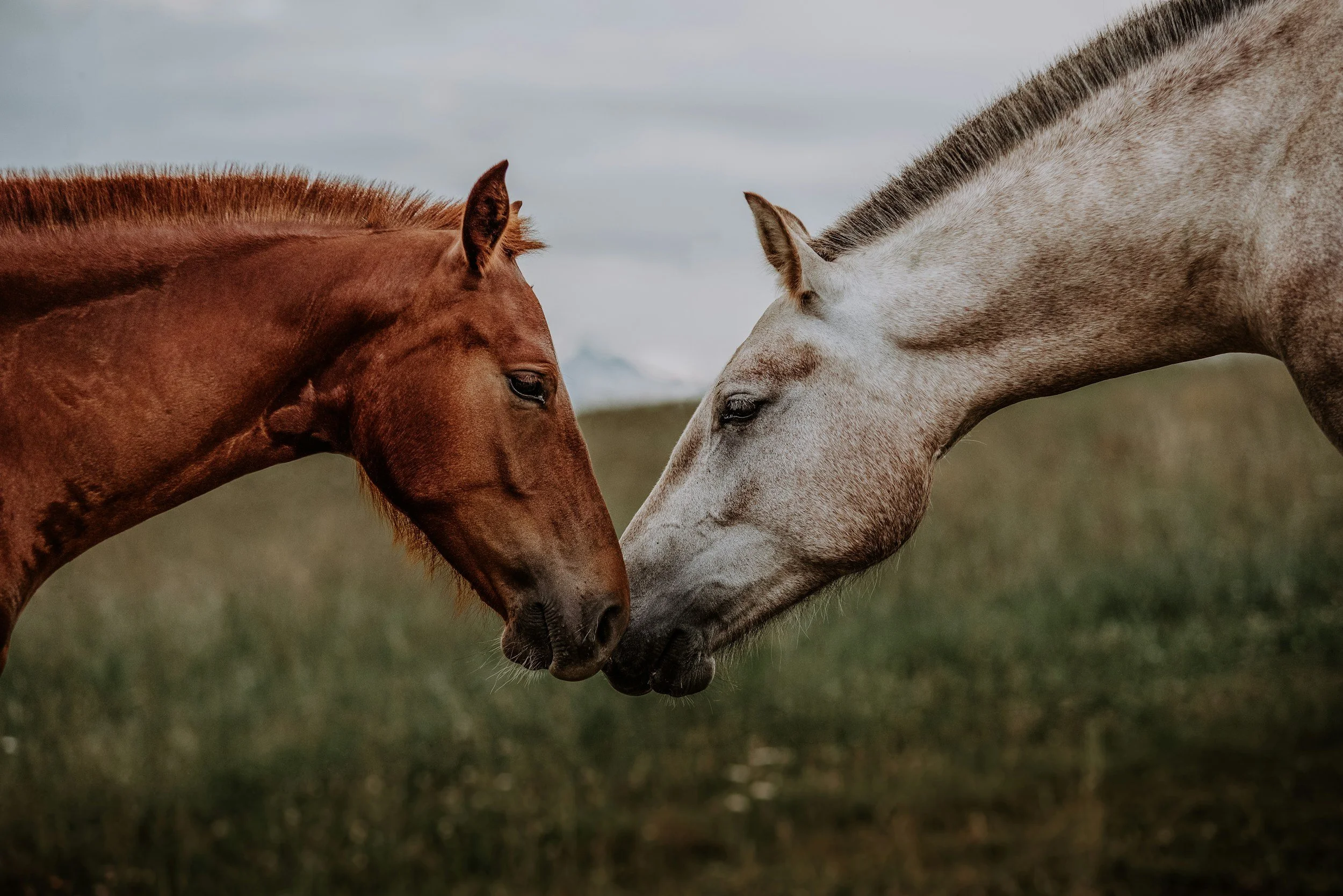
Every horse carries experiences, emotions, and tension patterns that shape how they move, respond, and interact with the world.
The Complete Wellness Session is designed to help your horse find emotional ease, nervous system balance, and a deeper sense of comfort in their body and environment so they can show up as their best self in everything else you do together.
You don’t need extreme behavior for your horse to benefit.
Every horse has a nervous system, and most horses are carrying far more tension than their owners realize.
What a session looks like:
Check-In & Conversation
We begin with a brief discussion about how your horse has been feeling, any recent changes or challenges, and what you would like support with. This helps shape the intention and focus of the session.
Observation
Before any hands-on work, I take time to simply observe your horse — both standing and moving. Watching their posture, expression, breathing, and natural movement gives valuable insight into where they may be holding tension, how their nervous system is functioning, and what they’re ready for that day.
Creating Safety & Connection
If your horse needs help settling or feeling safe, we may begin with quiet presence work, soft interaction, or light groundwork. This step helps your horse regulate and creates the foundation for deeper relaxation and responsiveness.
Your horse sets the pace — nothing is rushed or forced.
Wellness Work
Once your horse shows readiness, we begin the core of the session. This may include:
Nervous system regulation techniques
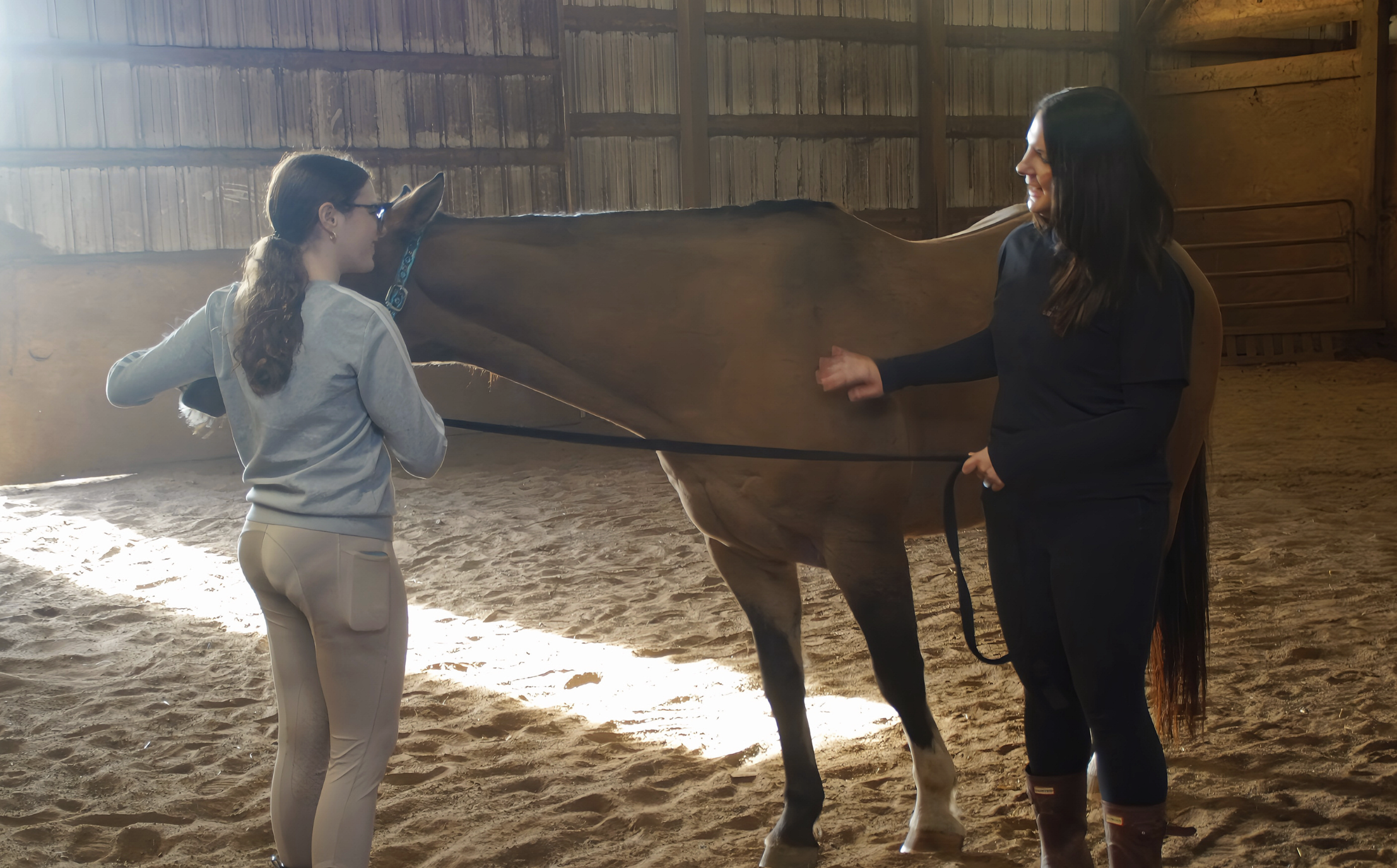
Light movement, breathwork, gentle touch, and craniosacral observation to help your horse relax and shift into a calmer state.Lymphatic-inspired strokes
Gentle, rhythmic strokes that support softness and encourage natural fluid movement without pressure or manipulation.Craniosacral observation
Subtle, awareness-based attention to cranial and sacral rhythms, used to understand how the nervous system is functioning and where the horse may be holding tension.Cold-Light Support
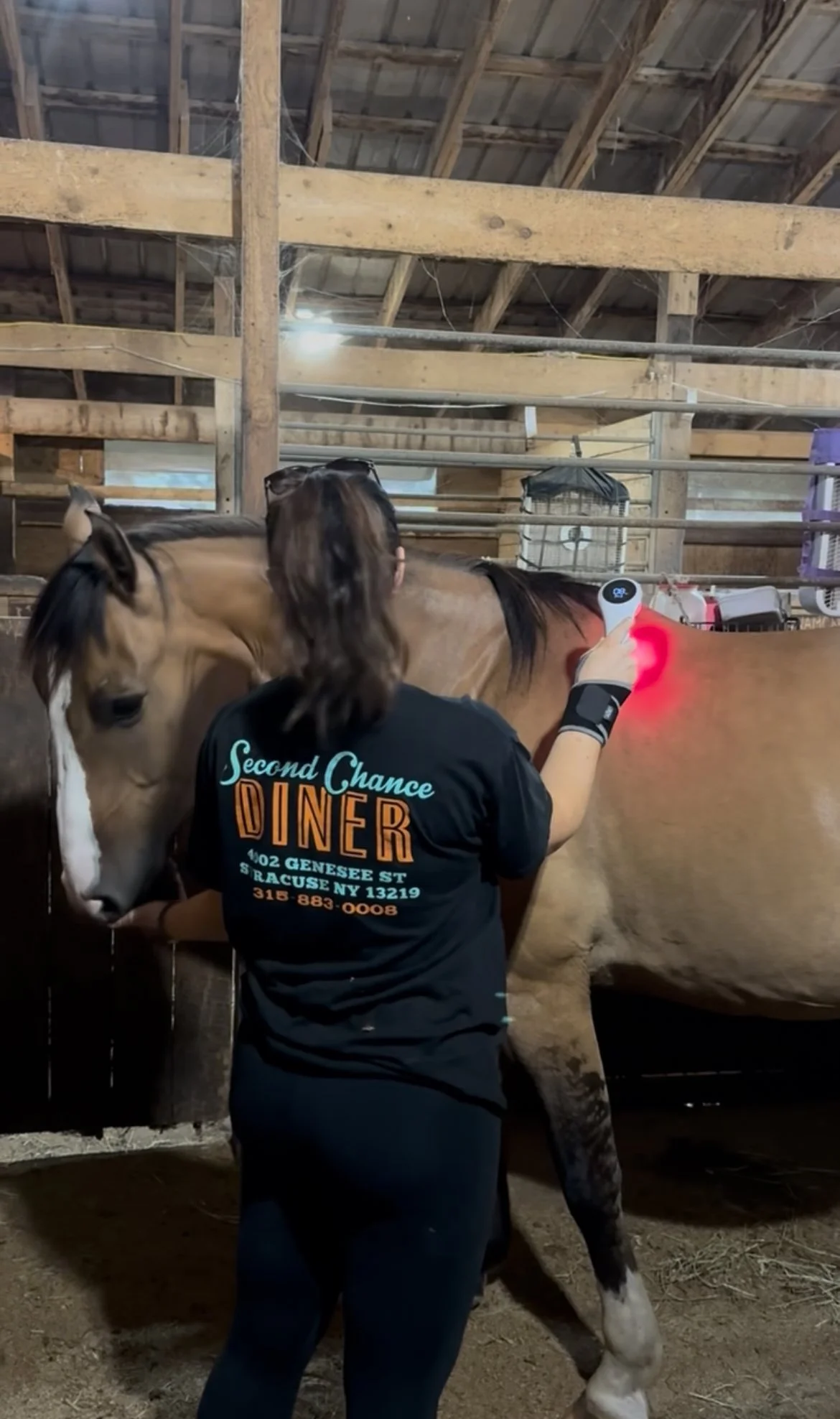
A calm, non-invasive application of low-level cold light to encourage comfort, ease, and settling.Intuitive, energy-focused interaction
Grounding, energetic presence work that helps the horse feel centered, connected, and safe.
Each session adapts moment by moment to what your horse communicates and what they’re ready to receive.
Wrap-Up & Report
Afterward, you’ll receive a written report via email summarizing observations and any recommended follow-up support between sessions.
Because every horse regulates at their own pace, sessions typically range from 45 to 90 minutes.
How it’s different
By supporting the horse on an emotional and physiological level, we create the foundation for everything else — better movement, better training experiences, clearer communication, and a calmer baseline.
Using principles from equine psychology, nervous system science, and years of hands-on work with anxious and overwhelmed horses, we look at:
why your horse responds the way they do
what patterns of tension or emotional holding they’re showing
how to help them feel safe enough to soften and engage
Instead of trying to “fix” behavior, we support the horse’s internal state so they can shift on their own.
Click below to book - we’ll send you a quick intake form and get you on the schedule!
Common Reasons Owners Book a Session
Anxiety, tension, or hypervigilance
Difficulty settling or focusing
Emotional holding that shows up as behavioral resistance
Sudden changes in behavior without a training explanation
Shutdown, guardedness, or disconnection
Sensitivity to touch, pressure, or new environments
Difficulty relaxing under saddle or on the ground
Horses recovering emotionally from past handling or stressful experiences
Horses who seem “fine” physically but not fine emotionally
Any horse — even the well-behaved, steady ones — can benefit from nervous system support and gentle, whole-horse work.
Why This Approach Works
Research in equine behavior, neurobiology, and learning theory shows that:
Horses cannot learn or problem-solve while in a stress state.
The sympathetic nervous system (fight/flight) restricts movement, tightens the body, and increases reactivity.
The parasympathetic system (rest/settle) allows softening, curiosity, and connection.
Emotional tension can influence posture, movement patterns, and responsiveness.
Horses co-regulate with the humans and environment around them.
So when the nervous system shifts from survival mode into regulation:
muscles relax because they are no longer bracing for action
behavior changes because the horse can think instead of react
movement improves because tension patterns aren’t restricting the body
connection deepens because the horse feels safe enough to engage
learning becomes easier because the brain is no longer prioritizing threat detection