Understanding Tension in the Equine Body
This practical, short focus class gives you a clearer place to start when your horse feels different, guarded, or harder to understand. You’ll learn what tension can look like in the body, where it commonly shows up, and how to begin observing your horse with a more informed eye!
Tension is not always tight muscles
When I talk about tension, I am not only talking about physical tightness.
I’m talking about the way a horse may brace, guard, hold, or compensate when something does not feel easy in the body, in the nervous system, or in the moment.
That might show up in the jaw, poll, neck, back, ribcage, hind end, posture, movement, expression, or behavior.
The goal is to help you see the horse in front of you a little more clearly!
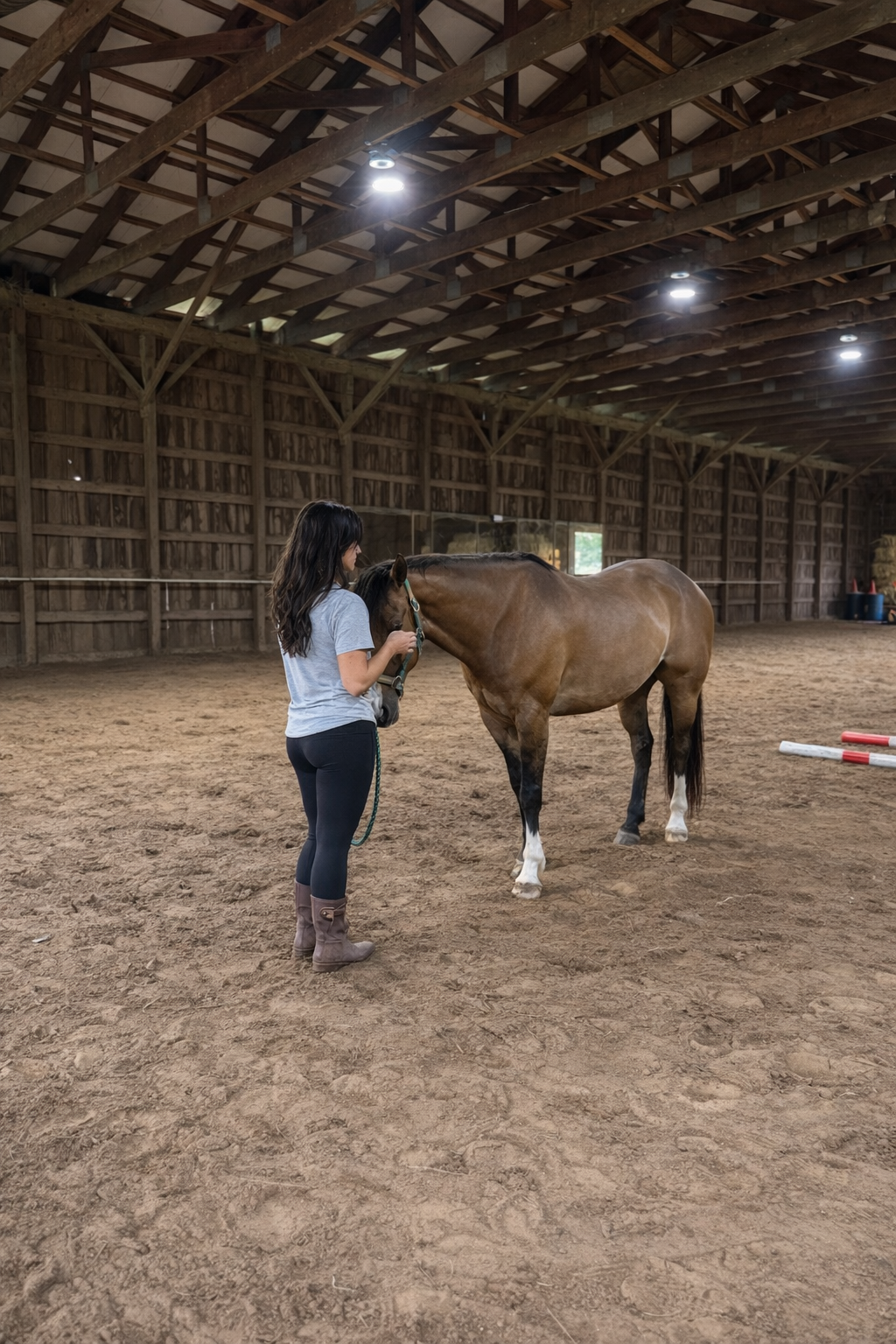
In this class, you’ll learn how to look for tension in a more thoughtful, whole-horse way. We cover what tension really is, where it commonly shows up, what to notice in stillness and in motion, and how body tension can influence posture, movement, and behavior.
You’ll learn:
what tension can look like beyond obvious tightness
where I usually start looking in the body
what clues may show up before the horse even moves
what changes once the horse starts walking, bending, or transitioning
how tension can start to look behavioral
why compensation can make the picture confusing
what signs of softness and ease can look like instead
This class is for you if...
your horse feels tense, braced, distracted, reactive, or hard to reach
you have days where your horse feels different and you are not sure why
the usual explanations do not always feel like the whole story
you want to better understand what the body may be showing you
you want to make more thoughtful choices before asking for more
you like learning in a grounded, horse-first way without getting overwhelmed
you want to understand more before pushing forward
By the end of this focus class, you’ll have a better sense of what to notice when your horse is standing still, moving, and when behavior starts to change.
You’ll know where to start looking, what questions to ask yourself, and what signs may be worth tracking over time.
Most of all, you’ll have a more informed eye.
The more clearly you can see what your horse is showing you, the more thoughtfully you can respond.
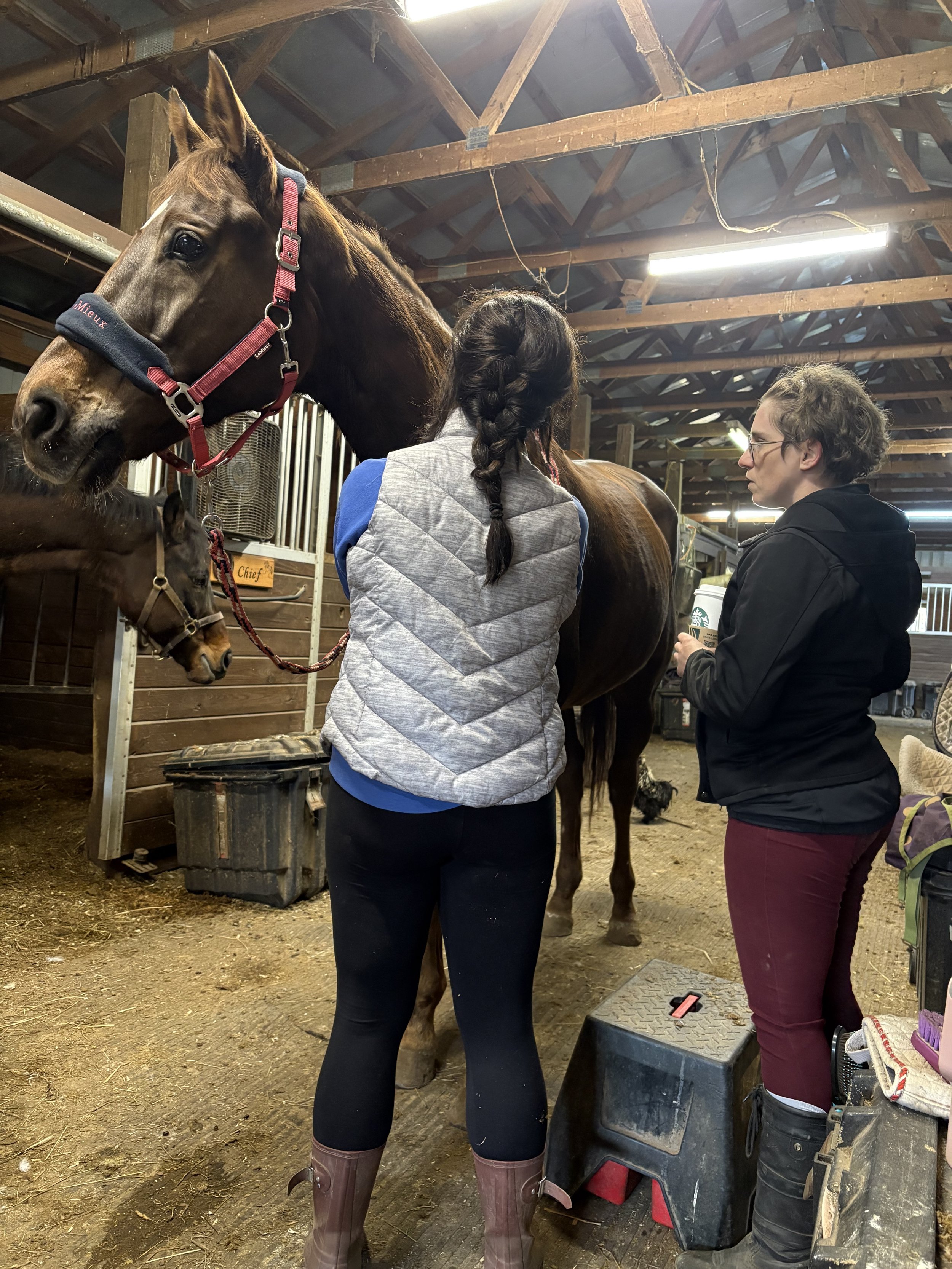
In this class, you’ll learn how to look for tension in a more thoughtful, whole-horse way. We cover what tension really is, where it commonly shows up, what to notice in stillness and in motion, and how body tension can influence posture, movement, and behavior.
I’m Chelsie Brooks, an equine behavior specialist and an IAABC member with over 30 years of experience in the horse world. At the core of my work is a belief that horses deserve a voice. Every behavior is a form of communication, and when we take the time to listen, we uncover what our horses truly need. My role is to help you understand those signals and guide both horse and rider toward trust, relaxation, and balance. The general goal is always the same…creating space for horses to be heard and for real partnership to grow.
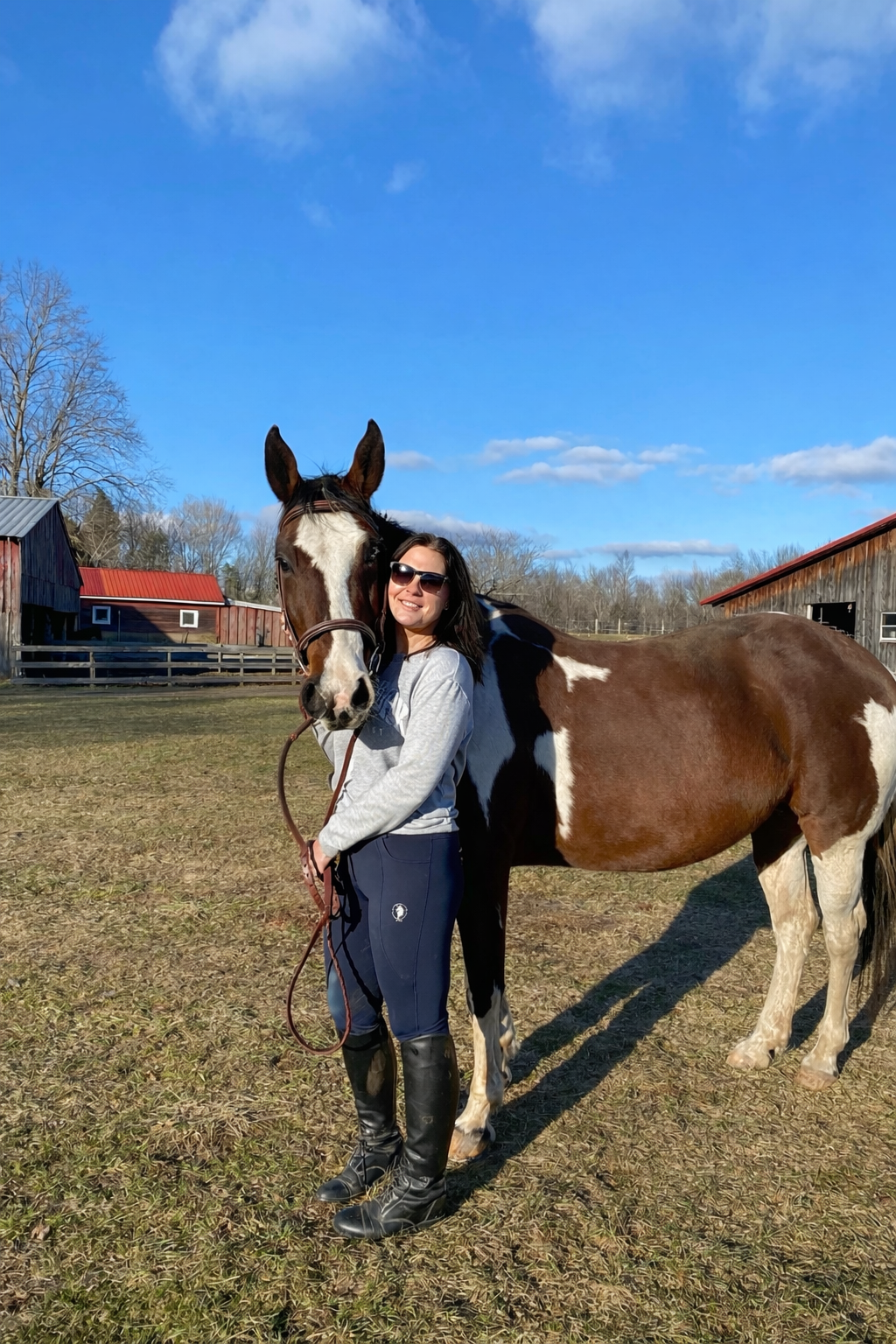

Nice to Meet You!
About Your Instructor
-
Morrisville State University - 2003
Post University 2023
-
Centre of Excellence - 150 hour certification
-
Currently putting in hours for Equine Behaviorist Certification for the International Association of Animal Behavior Consultants.
-
2.5-hour certification led by Debbi Bell + over 50 hours of hands-on experience.
-
2 hour certification - Taught by Celine Homan
-
Yoga Renew