
Understanding Tension in the Equine Body
This foundational class teaches you how to observe the whole horse, connect subtle changes across the body, and understand when tension is beginning to affect balance, movement, and participation.
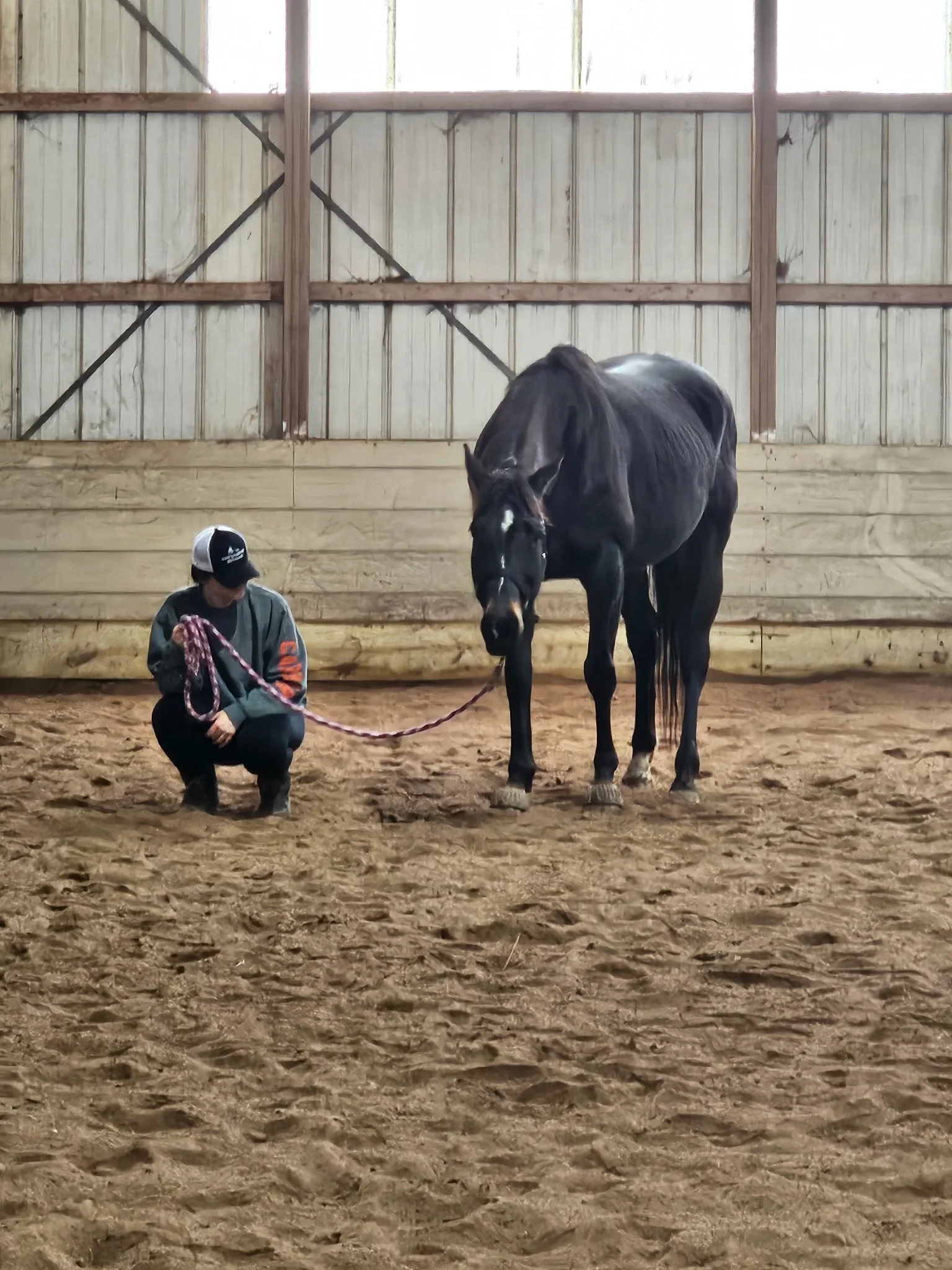
The manifestation of tension is rarely dramatic.
It begins with small changes, and that’s why it’s so easy to miss.
The horse still completes the task, so the focus stays on the exercise rather than how the body is organizing underneath it.
Over time, one area begins to take over for another. Weight shifts. Movement becomes more restricted. Behavior changes. What first looked like a minor inconsistency starts to form a wider pattern.
Understanding Tension in the Equine Body teaches you how to read that pattern.
You will learn how to connect what you see in posture, movement, balance, and behavior so those quieter signs no longer sit in isolation.
Instead of waiting for the body to make the problem obvious, you begin noticing when the horse is compensating, when the work no longer fits comfortably, and when the next step needs to change!
What You’ll Learn
1. What Tension Really Is
Understand tension as more than a tight muscle. We explore how the body holds, protects, and reorganizes itself in response to stress, discomfort, habit, and compensation.
2. Why We Look for Tension
See how tension changes posture, movement, responses, and the overall experience of work, including the moments that are easily mistaken for training problems.
3. Where Horses Commonly Hold Tension
Learn where tension often becomes visible through the jaw, poll, neck, shoulders, topline, ribcage, and hindquarters, while keeping the whole body in view.
4. What the Body Tells Us Before Movement
Use the quiet moments to observe expression, the jaw, neck, topline, posture, and weight distribution before the horse takes the first step.
5. What Changes Once the Horse Moves
Recognize shortened steps, rushing, restricted bend, difficult transitions, and other signs that movement lacks freedom and organization.
6. When Tension Starts to Look Behavioral
Explore why rushing, resistance, distraction, spooking, or difficulty standing still should include the body in the conversation rather than being dismissed as attitude.
7. When the Body Is Managing More Than It Shows
Follow the compensation patterns that develop when one side, region, or movement begins taking over for another.
8. What Softness Looks Like
Move beyond the idea of a perfect outline and recognize softness through expression, breathing, posture, movement, connection, and reduced guarding.
9. Before You Ask for More
Create a simple observation habit that helps you read the horse standing in front of you before deciding what the session requires.
The research supports looking deeper.
Research continues to show that physical discomfort does not always appear as an obvious inability to work.
Studies have identified changes in behavior and facial expression alongside mild movement asymmetry and orthopedic pain. Researchers have also documented how restriction or lameness in one area changes movement elsewhere in the body through compensatory patterns.
Head and neck position also influences movement through the back and stride length, reinforcing the importance of viewing the horse as an interconnected body rather than a collection of isolated parts.
This does not mean every change in behavior, posture, or movement proves pain.
It means those changes deserve thoughtful observation.
Understanding Tension in the Equine Body gives you a practical framework for noticing those patterns without stepping into diagnosis.
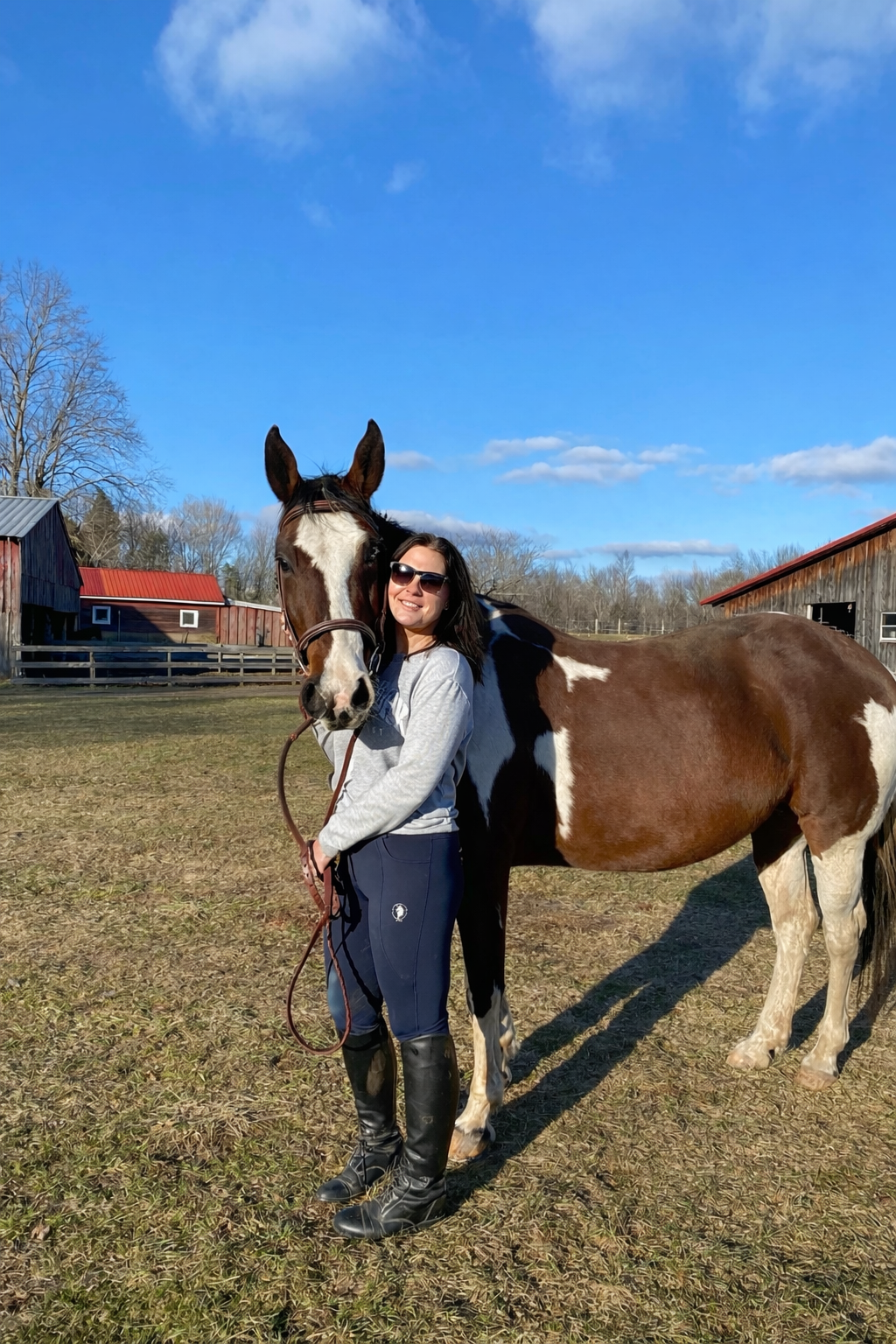
An Equine Behavior and Body Coach/IAABC member with over 30 years of experience in the horse world. At the core of my work is a belief that horses deserve a voice. Every behavior is a form of communication, and when we take the time to listen, we uncover what our horses truly need.
I created Understanding Tension in the Equine Body because horses are often judged by whether they complete the task, while the quieter changes in posture, movement, and behavior go unnoticed. This class helps owners slow down, connect those signs, and make more informed decisions about the horse in front of them!

Hi, I’m Chelsie!
Enroll in Understanding Tension in the Equine Body

Tension influences how the equine body moves, functions, and responds to everyday demands. In this focused class, we explore what tension is, how it develops within the body, and why understanding it gives horse owners a clearer picture of movement, behavior, comfort, and performance. By learning to view tension as part of a larger physical pattern, you can make more thoughtful decisions about training, exercise, recovery, and the support your horse needs!
FAQs
Do I need experience with equine anatomy?
1
No. This class explains the concepts in clear, practical language and does not require previous anatomy or bodywork training.
Is this class only for ridden horses?
2
No. The observation skills apply whether your horse works under saddle, in-hand, at liberty, or is simply moving through daily life.
Does every sign of tension mean my horse is in pain?
3
No. Tension can reflect stress, habit, imbalance, compensation, discomfort, or several influences working together. The class teaches observation, not diagnosis.
Will I learn how to treat tension?
4
This is an educational class designed to help you recognize patterns in posture, movement, and behavior. It does not teach treatment or replace support from a veterinarian or another qualified professional.
Start seeing tension before it becomes impossible to miss.
In 43 minutes, gain a clearer way to read changes in posture, movement, balance, and behavior, then use that information to make more thoughtful decisions for the horse in front of you.